Analyzing Myanmar’s response to Gambia’s genocide allegations at the ICJ

75
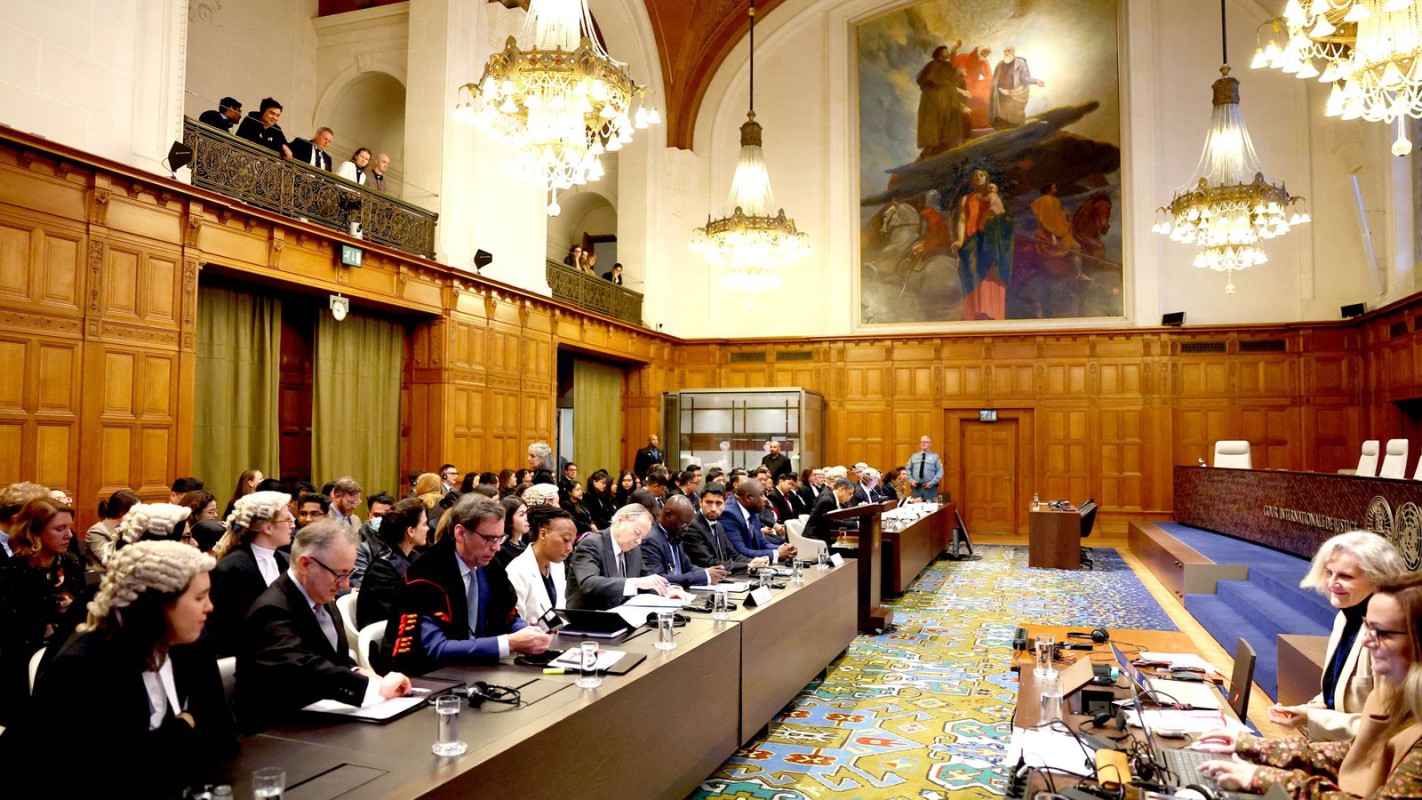
Phyo Lin Aung (NP News) - Jan 26
After The Gambia filed its submissions from January 12 to 15, Myanmar defended its position that it did not commit genocide against the Bengalis from January 16 to 20. The Myanmar legal team argued that the information and findings submitted by Gambia are merely selective and biased, as it filed the case based on the findings of the Fact-Finding Mission (FFM) in 2018.
“The FFM continues to cite unreliable and biased sources. Such citations amount to a pre-trial punishment for Myanmar. Since 2019, Gambia (and the FFM) has made no effort to substantiate the evidence in its reports. They continue to treat those reports as facts and demand that the Court accept them,” Union Minister U Ko Ko Hlaing said.
In addition, Gambia has falsified information from its sources, disregarding its duty to act in good faith before the Court. It has furthermore fostered a dangerous mixing of roles, in which its representatives and its sources of evidence (the so-called independent NGOs and witnesses) effectively sit on the same bench. This is in no way helpful to the integrity of the proceedings and casts serious doubt on the quality of the material put before the Court. An accusation of genocide is too grave to be handled in such a haphazard and unprofessional manner, he said.
Mr. Christopher Staker, the lead lawyer for Myanmar, explained that the genocide alleged by Gambia requires the fulfillment of strict legal requirements and that, since genocide constitutes a distinct legal standard, the burden of proving that Myanmar has violated its obligations under the Convention lies with the claimant country.
Unrelated agendas in Gambia’s submissions
Furthermore, some of the submissions made by Gambia appear to use the current proceedings to advance agendas unrelated to the Genocide Convention, such as permitting the legal use of the name “Rohingya” and automatically granting citizenship to those living in refugee camps in Bangladesh upon their return to Myanmar.
For example, Gambia objected to Myanmar’s use of the term “Bengali” instead of “Rohingya,” but failed to explain that there are valid reasons for using this term. It is not possible to designate an ethnic group by a name that is not among the 135 officially recognized ethnic groups under Myanmar law.
Along Myanmar’s borders, ethnic groups live on both sides. Just as the Lisu, Iko, and Lawa people live along the border with China, and the Tai, Mon, and Kayan people live along the border with Thailand, Bengali communities also live on both sides of the border in northern Rakhine State, formerly known as the Mayu region. Historically, many ethnic groups have lived across borders between China, Myanmar, and Thailand. For instance, in Myanmar they are known as Shan, while in China they are called Tai. Similarly, Bengali ethnic groups live in both Bangladesh and Myanmar, and in Myanmar they are compelled to use the name Rohingya. It also cannot be denied that their culture, ethnicity, and religion are the same as those living in neighboring Bangladesh.
“The fact that a group is not referred to by a particular name cannot be regarded as a denial of that group’s existence or right to exist, nor as an intention to destroy it physically or biologically,” the Union Minister responded.
Gambia also alleged that Myanmar does not recognize members of the Bengali group as citizens. This allegation, however, is not relevant to the case before the ICJ.
“Citizenship is an individual right that depends on whether a person meets certain criteria. Membership in a protected group and eligibility for citizenship are separate issues. Denying a group automatic citizenship does not mean that it has no right to exist or that there is an intention to destroy it,” the Union Minister responded.
Currently, many Bengalis in Myanmar hold one of three forms of Myanmar citizenship. At present, nearly 50,000 people hold National Verification Cards (NVCs), which constitute the first stage of the citizenship application process in Rakhine State. However, some Bengalis in northern Rakhine State continue to refuse participation in the NVC process.
This refusal has reportedly been due to political demands for automatic citizenship, pressure from activists, and misinformation suggesting that applying for an NVC could result in the loss of citizenship. A total of 154,049 eligible Rohingya citizens are eligible to vote in Myanmar’s 2025 general election. 57 political parties and 4,861 candidates are competing nationwide, including in Rakhine State, and voting is free regardless of ethnicity or religion, demonstrating the absence of discrimination.
These points represent Myanmar’s immediate response to what it describes as Gambia’s unreasonable allegations, which are unrelated to the Genocide Convention.
Omission of key facts by Gambia
In deciding this case, it is impossible to ignore the terrorist attacks carried out by the ARSA group in northern Rakhine State in 2016 and 2017. These attacks prompted the Tatmadaw to implement what it terms “clearance operations.” It is important to clarify that this is a military term of art referring to counter-insurgency or counter-terrorism operations and is used worldwide. Gambia has not denied the actions of the ARSA terrorist group during the 2016 and 2017 period but has been reluctant to acknowledge the government’s necessary response.
In this regard, Myanmar’s lead lawyer argued: “Gambia’s submissions do not mention any of the apparent attacks by ARSA, nor do the FFM reports. This omission constitutes a failure by Gambia to discharge its burden of proof and is contrary to proper judicial standards.”
During the second day of Myanmar’s arguments, Myanmar’s lawyer, Mr. Sam-Bloom Cooper, stated that Gambia focused on only three villages in northern Rakhine State—Mingyi, Chut Pyin, and Maung Nu—with populations of fewer than 4,300, 1,200, and 4,600 respectively, out of 478 exclusively Bengali settlements and 31 partially Bengali settlements, and that the main allegations were not supported by solid evidence.
He further explained that the incidents in those villages were not as Gambia alleged, and that nearby villages also suffered violence perpetrated by ARSA. Moreover, those killed were not only Rohingya, as claimed, but also Hindus, Thets, and Daingnets. Myanmar’s submissions provide detailed village-by-village analyses.
Mr. Cooper also emphasized the necessity of understanding why Myanmar’s military had deployed troops in northern Rakhine State.
“Military forces were present for an undeniable reason, namely ARSA—which repeatedly attacked military and police facilities, coerced the local Bengali population, murdered those who opposed them within their communities, and killed innocent non-Bengalis as well. Attacks by ARSA occurred in October and November 2016, and ARSA was known to be planning further attacks. An increased security presence was therefore understandable and indeed inevitable,” he explained.
Moreover, these counter-terrorism operations were carried out only in areas where ARSA was active. The Tatmadaw has consistently stated that it was not targeting Bengalis as a group. On 28 August, Amnesty International obtained audio recordings of ARSA leader Ataullah instructing his followers via WhatsApp: “Burn down all Rakhine villages, one by one… Do not spare a single village; burn all Mro villages and all Daingnet villages.” These recordings indicate that ARSA deliberately planned attacks across northern Rakhine State.
Credibility of witnesses
Myanmar lawyers pointed out that Gambia’s allegations of brutality rely solely on unverified, anonymous witness testimonies and interview records. These omit the role of ARSA militants and thus misrepresent the facts. This concern is heightened by rare cases in which a single individual provided multiple testimonies that differed significantly and included admissions of having lied.
Myanmar’s lead lawyer argued that “Gambia is asking the Court to accept the findings of the FFM report as if they were already finally adjudicated (res judicata), while failing to respond in detail to Myanmar’s arguments. In accordance with the fundamental principles of the rule of law and judicial independence, the Court must itself determine and assess the facts according to the applicable standard of proof. The Court cannot delegate its fact-finding responsibilities to any body established by a political organization or an NGO. Since genocide is among the gravest accusations that can be made against a State, it must be advanced with due restraint.”
Mr. Christopher Staker stated during his submissions before the ICJ on January 19 that almost all of the evidence cited by Gambia was derived from testimonies provided by ARSA members or individuals in refugee camps in Bangladesh who feared ARSA.
Mr. Sam-Bloom Cooper further noted that “of the 53 witnesses presented by the FFM, none mentioned ARSA. This raises the question of whether the witnesses were afraid of ARSA, loyal to it, or complicit in a broader conspiracy.”
Many unnamed witnesses were interviewed in refugee camps in Bangladesh. Their failure to speak about ARSA may stem from fear or coercion, as ARSA members reportedly take refuge in those camps. Human Rights Watch, Amnesty International, the International Crisis Group, and the Bangladesh police have all documented killings within the camps. This suggests that fear of ARSA influences witness testimony and raises serious doubts about its reliability.
It was also pointed out that witnesses who submitted prepared statements through Legal Action Worldwide were clients of that organization, and that the evidence was provided only to Gambia and not to Myanmar, indicating that Legal Action Worldwide was actively assisting Gambia in the proceedings.
Myanmar further argued that the extremely high standard of proof required for a charge as serious as genocide cannot be met through reports or media articles produced by FFMs, NGOs, or similar organizations.
The author is confident that, in any event, Gambia’s allegations will be dismissed due to Myanmar’s strong and well-substantiated rebuttals. If Myanmar prevails or proves its innocence, it should consider filing a counter-case against Gambia.
A country like Gambia, which has no direct connection to Myanmar, brought this case for political gain, making an accusation as grave as genocide and thereby damaging Myanmar’s national dignity. Moreover, should Gambia lose the case, Myanmar should seek compensation for what Gambia attempted to claim from Myanmar. Such compensation should be pursued in a manner commensurate with the dignity of each and every citizen of Myanmar.